Great hammerhead
Sphyrna mokarran
Sharks and rays · family Sphyrnidae · order Carcharhiniformes
Critically endangered on the IUCN Red List
About
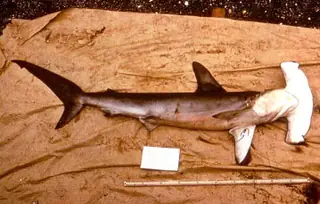
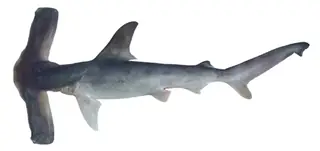
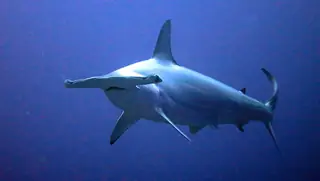
The great hammerhead is the largest species of hammerhead shark, belonging to the family Sphyrnidae, attaining an average length of 4.6 m (15 ft) and reaching a maximum length of 6.2 m (20 ft). It is found around the globe in all the warmer parts of the oceans. The great hammerhead can be distinguished from other hammerheads by the shape of its "hammer", which is wide with an almost straight front margin, its tall, sickle-shaped first dorsal fin, and its strongly falcated pelvic fins. A solitary, strong-swimming apex predator, the great hammerhead feeds on a wide variety of prey ranging from crustaceans and cephalopods, to bony fish, to smaller sharks. Observations of this species in the wild suggest that the cephalofoil functions to immobilize stingrays, a favored prey. This species has a viviparous mode of reproduction, bearing litters of up to 2-49 pups every two years.
From Wikipedia, CC BY-SA 4.0.
Where it has been recorded




- Records
- 10,896
- Countries
- 49
- Recorded
- 1941–2026
Most records come from
- Australia 10,028
- Faroe Islands 110
- United States 103
- Mozambique 44
- Bahamas 28
- United Kingdom 26
- Mexico 23
- Svalbard & Jan Mayen 21
- French Polynesia 15
- Colombia 14
- Cayman Islands 14
- Brazil 12
Records are places where people found and reported the animal, from GBIF; fossils and zoo animals are left out; museum specimens and tracking studies count, and well-studied countries have far more. Squares on the map: brighter means more records.