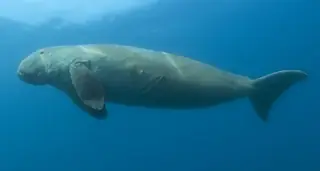
West Indian manatee
Trichechus manatus
Mammals · family Trichechidae · order Sirenia
Vulnerable on the IUCN Red List
About
The West Indian manatee, also known as the North American manatee, is a large, aquatic mammal native to warm coastal areas of the Caribbean, from the Eastern United States to northern Brazil. Living alone or in herds, it feeds on underwater plants and uses its whiskers to navigate. It is divided into two subspecies, the Florida manatee in the United States and the Antillean manatee in the Caribbean, of which the Florida manatee is classified as threatened and the Antillean manatee is classified as endangered; both face pressure from habitat loss, pollution, and other human activity. The West Indian manatee is the largest living member of the sirenians, a group of large aquatic mammals that includes the dugong, other manatees, and the extinct Steller's sea cow.
From Wikipedia, CC BY-SA 4.0.
Where it has been recorded




- Records
- 161,817
- Countries
- 20
- Recorded
- 1874–2026
Most records come from
- Brazil 121,949
- United States 37,568
- French Guiana 304
- Cuba 257
- Colombia 223
- Mexico 223
- Belize 144
- Puerto Rico 95
- Suriname 56
- Bahamas 32
- Dominican Republic 31
- Panama 21
Records are places where people found and reported the animal, from GBIF; fossils and zoo animals are left out; museum specimens and tracking studies count, and well-studied countries have far more. Squares on the map: brighter means more records.