Viviparous lizard
Zootoca vivipara
Reptiles · family Lacertidae
Least concern on the IUCN Red List
About
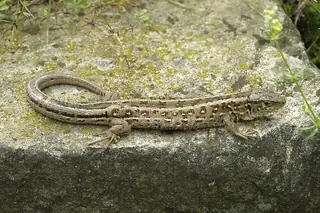
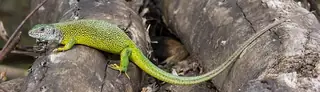
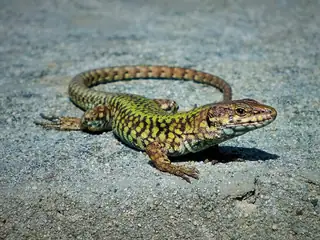
The viviparous lizard or common lizard is a Eurasian lizard. It lives farther north than any other non-marine, non-avian reptile species, and is named for the fact that it is viviparous, meaning it gives birth to live young. Both "Zootoca" and "vivipara" mean "live birth", in (Latinized) Greek and Latin respectively. It was called Lacerta vivipara until the genus Lacerta was split into nine genera in 2007 by Arnold, Arribas & Carranza.
From Wikipedia, CC BY-SA 4.0.
Where it has been recorded




- Records
- 281,218
- Countries
- 45
- Recorded
- 1787–2026
Most records come from
- Netherlands 89,691
- United Kingdom 61,630
- France 24,927
- Germany 22,185
- Switzerland 15,825
- Sweden 12,304
- Austria 9,935
- Russia 8,101
- Finland 7,500
- Denmark 7,390
- Norway 4,144
- Poland 2,947
Records are places where people found and reported the animal, from GBIF; fossils and zoo animals are left out; museum specimens and tracking studies count, and well-studied countries have far more. Squares on the map: brighter means more records.