Surinam toad
Pipa pipa
Frogs, toads and salamanders · family Pipidae · order Anura
Least concern on the IUCN Red List
About
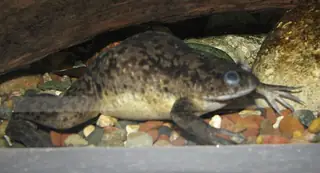
The common Surinam toad, the Suriname toad, or star-fingered toad, is a fully-aquatic species of frog, in the family Pipidae, with a widespread range across much of tropical South America and the island of Trinidad. The females of this species are well-known for "incubating" their eggs on their backs, in honeycomb-like depressions directly within the skin, releasing fully-formed froglets after a period of 4–5 months. Pipa pipa is an ambush predator, lying in-wait underwater for prey to inevitably wander too close, swiftly inhaling the unsuspecting creature using suction feeding. Additionally, the Surinam toad's rather flat body shape, combined with rather dark, dull coloration, serves as effective camouflage in the murky waters they inhabit, mimicking a dead leaf or piece of rotting wood as they await their next meal.
From Wikipedia, CC BY-SA 4.0.
Where it has been recorded




- Records
- 702
- Countries
- 10
- Recorded
- 1799–2026
Most records come from
- French Guiana 106
- Brazil 83
- Peru 79
- Suriname 49
- Bolivia 22
- Colombia 19
- Trinidad & Tobago 15
- Ecuador 12
- Venezuela 5
- Guyana 2
Records are places where people found and reported the animal, from GBIF; fossils and zoo animals are left out; museum specimens and tracking studies count, and well-studied countries have far more. Squares on the map: brighter means more records.