Steppe polecat
Mustela eversmanii
Mammals · family Mustelidae · order Carnivora
Least concern on the IUCN Red List
Oʻzbekcha: Dasht paroni
About
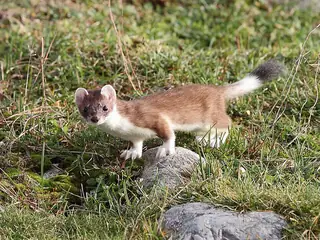
The steppe polecat, also known as the white or masked polecat, is a species of mustelid native to Central and Eastern Europe and Central and East Asia. It is listed as Least Concern on the IUCN Red List because of its wide distribution, occurrence in a number of protected areas, and tolerance to some degree of habitat modification. It is generally of a very light yellowish colour, with dark limbs and a dark mask across the face. Compared to its relative, the European polecat, the steppe polecat is larger in size and has a more powerfully built skull.
From Wikipedia, CC BY-SA 4.0.
Where it has been recorded




- Records
- 473
- Countries
- 11
- Recorded
- 1900–2026
Most records come from
- Russia 45
- Austria 29
- Romania 17
- Mongolia 13
- Hungary 9
- China 8
- Kazakhstan 8
- Bulgaria 3
- Ukraine 3
- Germany 1
- Poland 1
Records are places where people found and reported the animal, from GBIF; fossils and zoo animals are left out; museum specimens and tracking studies count, and well-studied countries have far more. Squares on the map: brighter means more records.