Spectral bat
Vampyrum spectrum
Mammals · family Phyllostomidae · order Chiroptera
Near threatened on the IUCN Red List
About
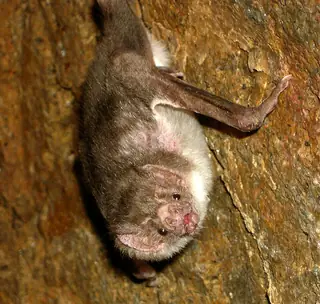
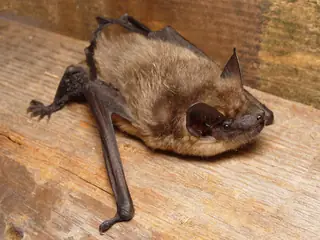
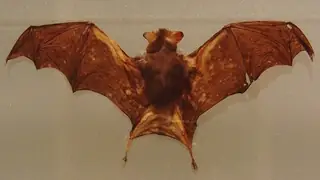
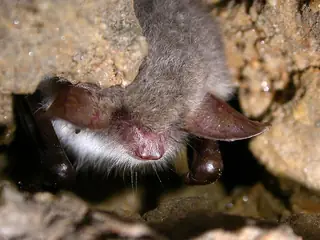
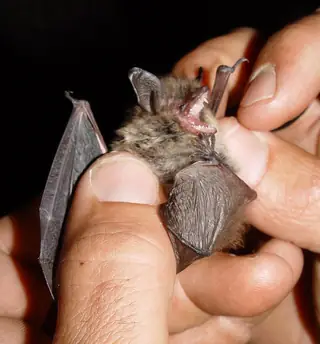
The spectral bat, also called the great false vampire bat, great spectral bat, American false vampire bat or Linnaeus's false vampire bat, is a large, carnivorous leaf-nosed bat found in Mexico, Central America, and South America. It is the only member of the genus Vampyrum; its closest living relative is the big-eared woolly bat. It is the largest bat species in the New World, as well as the largest carnivorous bat: its wingspan is 0.7–1.0 m (2.3–3.3 ft). It has a robust skull and teeth, with which it delivers a powerful bite to kill its prey. Birds are frequent prey items, though it may also consume rodents, insects, and other bats.
From Wikipedia, CC BY-SA 4.0.
Where it has been recorded




- Records
- 220
- Countries
- 13
- Recorded
- 1896–2026
Most records come from
- Brazil 19
- French Guiana 18
- Mexico 12
- Costa Rica 9
- Colombia 7
- Nicaragua 7
- Ecuador 4
- Peru 3
- Trinidad & Tobago 3
- Bolivia 2
- Belize 2
- Panama 2
Records are places where people found and reported the animal, from GBIF; fossils and zoo animals are left out; museum specimens and tracking studies count, and well-studied countries have far more. Squares on the map: brighter means more records.