

Six-banded armadillo
Euphractus sexcinctus
Mammals · family Dasypodidae · order Cingulata
Least concern on the IUCN Red List
About
The six-banded armadillo, also known as the yellow armadillo, is an armadillo found in South America. The sole extant member of its genus, it was first described by Swedish zoologist Carl Linnaeus in 1758. The six-banded armadillo is typically between 40 and 50 centimeters in head-and-body length, and weighs 3.2 to 6.5 kilograms. The carapace is pale yellow to reddish brown, marked by scales of equal length, and scantily covered by buff to white bristle-like hairs. The forefeet have five distinct toes, each with moderately developed claws.
From Wikipedia, CC BY-SA 4.0.
Where it has been recorded




- Records
- 4,203
- Countries
- 6
- Recorded
- 1900–2026
Most records come from
Records are places where people found and reported the animal, from GBIF; fossils and zoo animals are left out; museum specimens and tracking studies count, and well-studied countries have far more. Squares on the map: brighter means more records.
Related animals
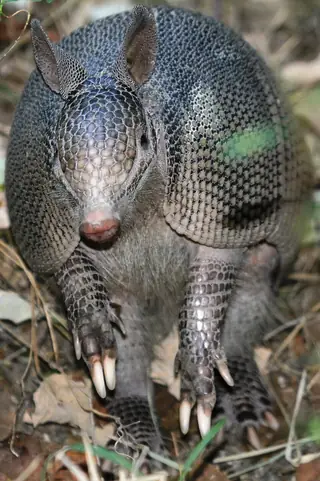 Nine-banded armadilloDasypus novemcinctus
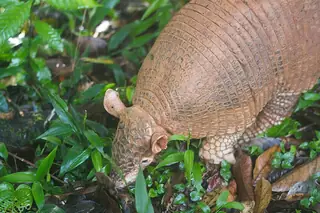 Giant armadilloPriodontes maximus
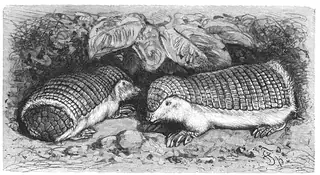 Pink fairy armadilloChlamyphorus truncatus
 PichiZaedyus pichiy
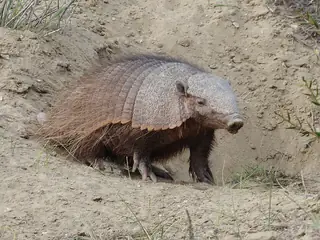 Big hairy armadilloChaetophractus villosus
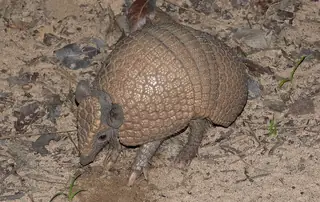 Brazilian three-banded armadilloTolypeutes tricinctus
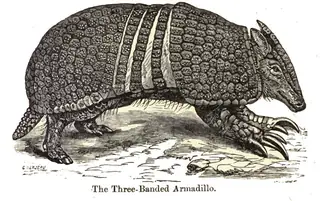 Southern three-banded armadilloTolypeutes matacus
- Screaming hairy armadilloChaetophractus vellerosus