Raccoon
Procyon lotor
Mammals · family Procyonidae · order Carnivora
Least concern on the IUCN Red List
Oʻzbekcha: rakun
About
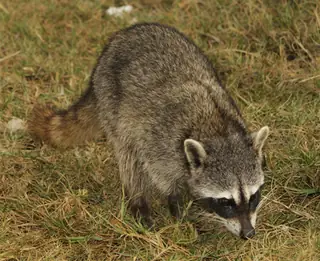
The raccoon, sometimes called the North American, northern or common raccoon to distinguish it from other species of raccoon, is a mammal native to North America. It is the largest of the procyonid family, having a body length of 40 to 70 cm, and a body weight of 5 to 26 kg. Its grayish coat mostly consists of dense underfur, which insulates it against cold weather. The animal's most distinctive features include its extremely dexterous front paws, its facial mask, and its ringed tail, which are common themes in the mythologies of the Indigenous peoples of the Americas surrounding the species. The raccoon is noted for its intelligence, and studies show that it can remember the solution to tasks for at least three years. It is usually nocturnal and omnivorous, eating about 40% invertebrates, 33% plants, and 27% vertebrates.
From Wikipedia, CC BY-SA 4.0.
Where it has been recorded




- Records
- 198,953
- Countries
- 46
- Recorded
- 1855–2026
Most records come from
- United States 110,885
- Canada 19,296
- Belgium 15,644
- Germany 14,855
- Luxembourg 11,038
- Mexico 5,969
- France 4,428
- Japan 2,777
- Costa Rica 1,830
- Switzerland 1,053
- Poland 530
- Guatemala 418
Records are places where people found and reported the animal, from GBIF; fossils and zoo animals are left out; museum specimens and tracking studies count, and well-studied countries have far more. Squares on the map: brighter means more records.