Polar bear
Ursus maritimus
Mammals · family Ursidae · order Carnivora
Vulnerable on the IUCN Red List
Oʻzbekcha: Oqayiq
About
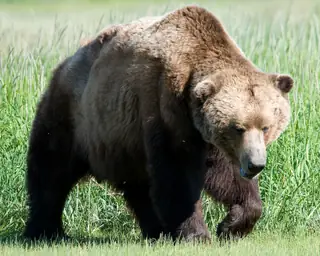
The polar bear is a large bear native to the Arctic and nearby areas. It is closely related to the brown bear, and the two species can interbreed. The polar bear is the largest extant species of bear and land carnivore by body mass, with adult males weighing 300–800 kg (660–1,760 lb). The species is sexually dimorphic, as adult females are much smaller. The polar bear is white or yellowish-furred with black skin and a thick layer of fat. It is more slender than the brown bear, with a narrower skull, longer neck and lower shoulder hump. Its teeth are sharper and more adapted to cutting meat. The paws are large and allow the bear to walk on ice and paddle in the water.
From Wikipedia, CC BY-SA 4.0.
Where it has been recorded




- Records
- 6,379
- Countries
- 8
- Recorded
- 1860–2026
Most records come from
- Canada 1,737
- United States 1,393
- Svalbard & Jan Mayen 1,097
- Greenland 316
- Russia 261
- Germany 5
- Norway 3
- Estonia 2
Records are places where people found and reported the animal, from GBIF; fossils and zoo animals are left out; museum specimens and tracking studies count, and well-studied countries have far more. Squares on the map: brighter means more records.