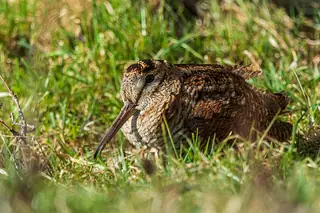
Pectoral Sandpiper
Calidris melanotos
Birds · family Scolopacidae · order Charadriiformes
Least concern on the IUCN Red List
About
The pectoral sandpiper, often abbreviated pec, is a small, migratory wader that breeds in arctic regions of North America and Asia, wintering in South America and Oceania. It eats small invertebrates. Its nest, a hole scraped in the ground and with a thick lining, is deep enough to protect its four eggs from the cool breezes of its breeding grounds. The pectoral sandpiper is 19–23 cm (7.5–9.1 in) long, with a wingspan of 38–46 cm (15–18 in).
From Wikipedia, CC BY-SA 4.0.
Where it has been recorded




- Records
- 785,891
- Countries
- 162
- Recorded
- 1800–2026
Most records come from
- United States 576,739
- Canada 108,124
- Netherlands 13,891
- Sweden 10,672
- Argentina 8,111
- Australia 8,001
- United Kingdom 7,142
- Peru 3,772
- Brazil 2,663
- Spain 2,443
- Mexico 2,291
- Norway 2,067
Records are places where people found and reported the animal, from GBIF; fossils and zoo animals are left out; museum specimens and tracking studies count, and well-studied countries have far more. Squares on the map: brighter means more records.