Oribi
Ourebia ourebi
Mammals · family Bovidae · order Artiodactyla
Least concern on the IUCN Red List
About
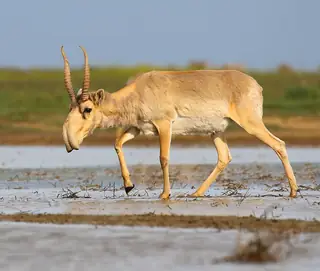
The oribi is a small antelope found in eastern, southern and western Africa. The sole member of its genus, it was described by the German zoologist Eberhard August Wilhelm von Zimmermann in 1783. While this is the only member in the genus Ourebia, eight subspecies are identified. The oribi reaches nearly 50–67 centimetres (20–26 in) at the shoulder and weighs 12–22 kilograms (26–49 lb). It possesses a slightly raised back, and long neck and limbs. The glossy, yellowish to rufous brown coat contrasts with the white chin, throat, underparts and rump. Only males possess horns; the thin, straight horns, 8–18 centimetres (3.1–7.1 in) long, are smooth at the tips and ringed at the base.
From Wikipedia, CC BY-SA 4.0.
Where it has been recorded




- Records
- 3,594
- Countries
- 25
- Recorded
- 1900–2026
Most records come from
- Benin 2,181
- Uganda 397
- South Africa 242
- Zambia 69
- Niger 55
- Ethiopia 51
- Mozambique 50
- Kenya 44
- Tanzania 43
- Burkina Faso 38
- Central African Republic 30
- Rwanda 21
Records are places where people found and reported the animal, from GBIF; fossils and zoo animals are left out; museum specimens and tracking studies count, and well-studied countries have far more. Squares on the map: brighter means more records.