Moor frog
Rana arvalis
Frogs, toads and salamanders · family Ranidae · order Anura
Least concern on the IUCN Red List
About
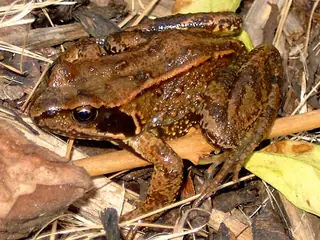
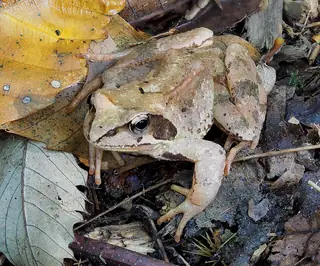
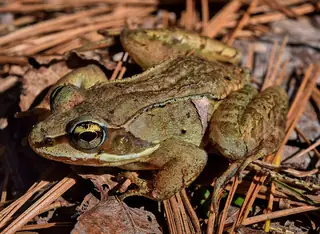
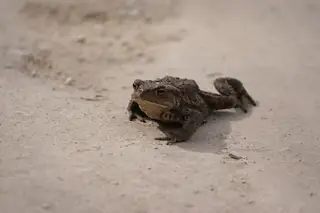
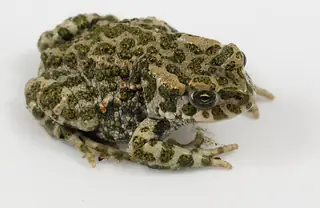
The moor frog is a slim, reddish-brown, semiaquatic amphibian native to Europe and Asia. Moor frogs are known for their ability to freeze solid and survive thawing. The frog makes use of various cryoprotectants i.e. antifreeze that decrease its internal freezing temperature. The species is distributed over a large range, covering a significant portion of Eurasia. Male moor frogs are known to turn blue temporarily during the height of mating season. This coloration is assumed to signal a mate's fitness. Moor frogs typically mate through multimale amplexus, a form of polyandry.
From Wikipedia, CC BY-SA 4.0.
Where it has been recorded




- Records
- 106,474
- Countries
- 28
- Recorded
- 1842–2026
Most records come from
- Netherlands 30,507
- Denmark 15,282
- Russia 12,394
- Germany 12,212
- Sweden 9,384
- Finland 8,740
- Poland 2,951
- Austria 1,890
- Ukraine 1,739
- Norway 1,427
- Estonia 933
- Belarus 734
Records are places where people found and reported the animal, from GBIF; fossils and zoo animals are left out; museum specimens and tracking studies count, and well-studied countries have far more. Squares on the map: brighter means more records.