Meerkat
Suricata suricatta
Mammals · family Herpestidae · order Carnivora
Least concern on the IUCN Red List
Oʻzbekcha: Surikat
About
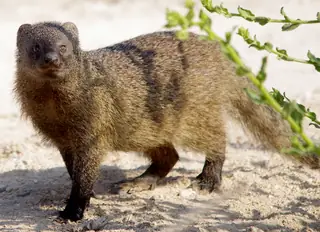
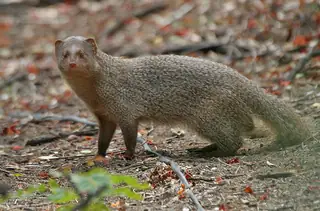
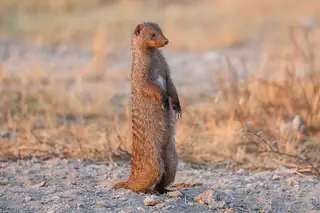
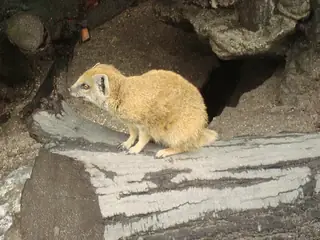
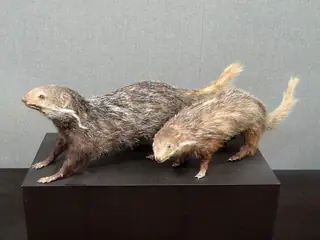
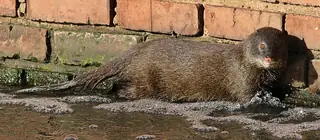
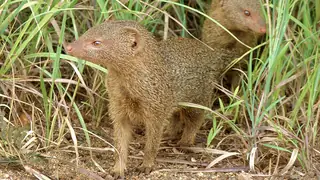
The meerkat or suricate is a small mongoose found in southern Africa. It is characterised by a broad head, large eyes, a pointed snout, long legs, a thin tapering tail, and a brindled coat pattern. The head-and-body length is around 24–35 cm (9.4–13.8 in), and the weight is typically between 0.62 and 0.97 kg. The coat is light grey to yellowish-brown with alternate, poorly defined light and dark bands on the back. Meerkats have foreclaws adapted for digging and have the ability to thermoregulate to survive in their harsh, dry habitat. Three subspecies are recognised.
From Wikipedia, CC BY-SA 4.0.
Where it has been recorded




- Records
- 1,537
- Countries
- 11
- Recorded
- 1894–2026
Most records come from
- South Africa 1,122
- Namibia 159
- Botswana 154
- Germany 16
- United States 3
- Brazil 2
- Angola 1
- Belgium 1
- Spain 1
- United Kingdom 1
- Netherlands 1
Records are places where people found and reported the animal, from GBIF; fossils and zoo animals are left out; museum specimens and tracking studies count, and well-studied countries have far more. Squares on the map: brighter means more records.