Macqueen's Bustard
Chlamydotis macqueenii
Birds · family Otididae · order Otidiformes
Vulnerable on the IUCN Red List
Oʻzbekcha: Osiyo yoʻrgʻa tuvalogʻi
About
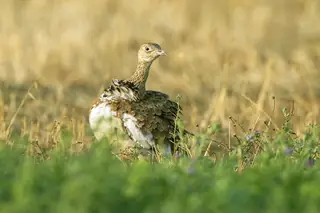
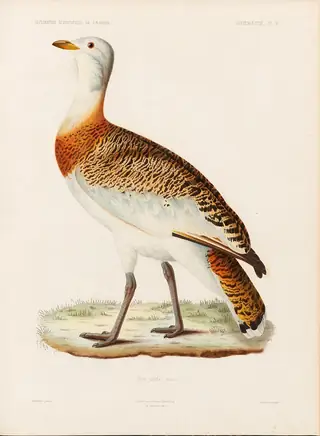
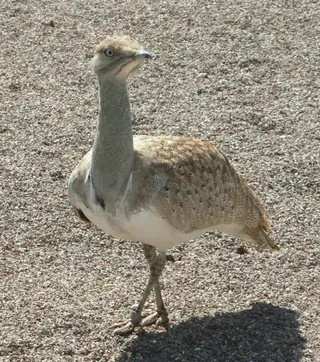
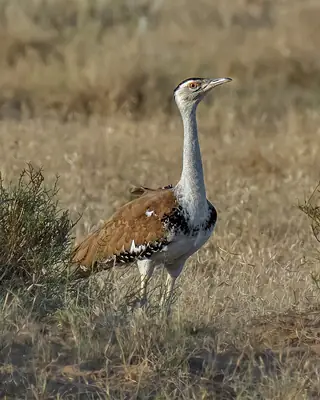
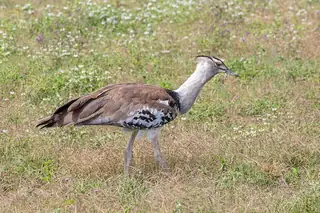
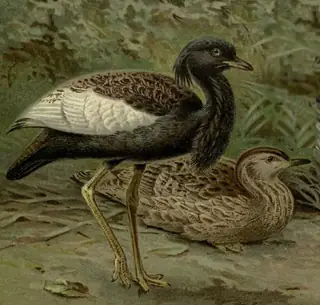
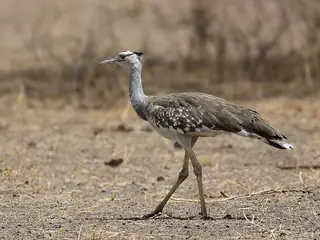
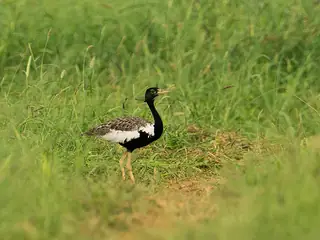
The Asian houbara, also known as MacQueen's bustard, is a large bird in the bustard family. It is native to the desert and steppe regions of Asia, east from the Sinai Peninsula extending across Iran and further north toward Kazakhstan and Mongolia. In the 19th century, vagrants were found as far west of their range as Great Britain. Populations have decreased by 20–50% between 1984 and 2004 mainly due to hunting and changes in land-use. The Asian houbara is a partial latitudinal migrant while the African houbara is more sedentary. These two species are the only members of the genus Chlamydotis. The Asian houbara used to be regarded as a subspecies of the African houbara.
From Wikipedia, CC BY-SA 4.0.
Where it has been recorded




- Records
- 4,005
- Countries
- 29
- Recorded
- 1841–2026
Most records come from
- Israel 2,390
- United Arab Emirates 496
- Kazakhstan 460
- Uzbekistan 274
- Iran 97
- China 33
- India 32
- Palestinian Territories 23
- Jordan 20
- Kuwait 18
- Sweden 18
- Saudi Arabia 16
Records are places where people found and reported the animal, from GBIF; fossils and zoo animals are left out; museum specimens and tracking studies count, and well-studied countries have far more. Squares on the map: brighter means more records.