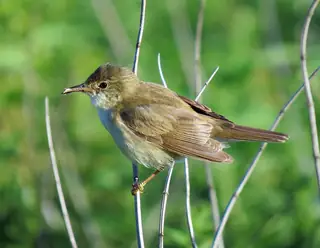
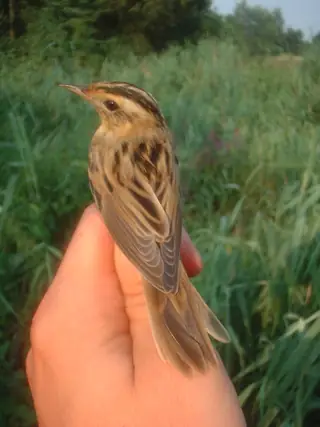
Great Reed Warbler
Acrocephalus arundinaceus
Birds · family Acrocephalidae · order Passeriformes
Least concern on the IUCN Red List
About
The great reed warbler is an insectivorous bird in the family Acrocephalidae. It is a medium-sized passerine bird and the largest of the warblers. It breeds throughout mainland Europe and the Western Palearctic and migrates to sub-Saharan Africa in the winter. It favours reed beds during the breeding season, while living in reed beds, bush thickets, rice fields, and forest clearings during the winter. It exhibits relatively low sexual dimorphism, and the sexes are similar in appearance. This species mates both polygynously and monogamously.
From Wikipedia, CC BY-SA 4.0.
Where it has been recorded




- Records
- 477,936
- Countries
- 116
- Recorded
- 1847–2026
Most records come from
- Spain 104,830
- Sweden 66,494
- France 41,475
- Poland 40,178
- Switzerland 34,523
- Netherlands 24,011
- Germany 20,486
- Israel 9,637
- Ukraine 9,187
- Türkiye 8,486
- Czechia 8,418
- Greece 8,258
Records are places where people found and reported the animal, from GBIF; fossils and zoo animals are left out; museum specimens and tracking studies count, and well-studied countries have far more. Squares on the map: brighter means more records.