

Great Hornbill
Buceros bicornis
Birds · family Bucerotidae · order Bucerotiformes
Vulnerable on the IUCN Red List
About
The great hornbill, also known as the concave-casqued hornbill, great Indian hornbill or great pied hornbill, is one of the larger members of the hornbill family. It occurs in the Indian subcontinent and Southeast Asia. It is predominantly frugivorous, but also preys on small mammals, reptiles, and birds. It has been listed as Vulnerable on the IUCN Red List since 2018. It is known to have lived for nearly 50 years in captivity. Due to its large size and colour, and importance in many tribal cultures and rituals, the Government of Kerala declared it as the official Kerala state bird. It is also the state bird of Arunachal Pradesh.
From Wikipedia, CC BY-SA 4.0.
Where it has been recorded




- Records
- 28,620
- Countries
- 14
- Recorded
- 1800–2026
Most records come from
- India 11,905
- Thailand 9,813
- Malaysia 1,805
- Bhutan 1,688
- Cambodia 1,372
- Nepal 709
- Vietnam 480
- China 314
- Myanmar (Burma) 265
- Indonesia 116
- Singapore 49
- Laos 23
Records are places where people found and reported the animal, from GBIF; fossils and zoo animals are left out; museum specimens and tracking studies count, and well-studied countries have far more. Squares on the map: brighter means more records.
Related animals
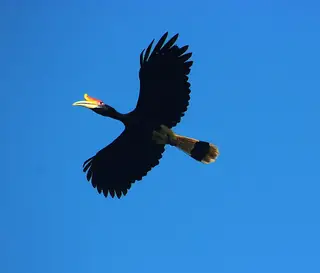 Rhinoceros HornbillBuceros rhinoceros
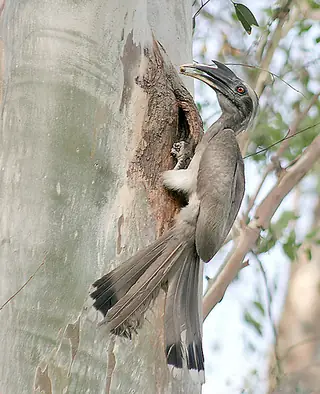 Indian Grey HornbillOcyceros birostris
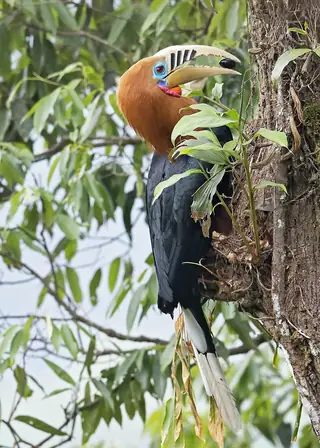 Rufous-necked HornbillAceros nipalensis
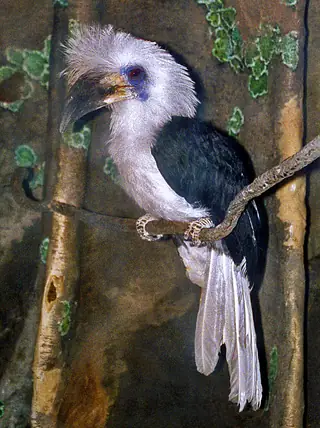 White-crowned hornbillBerenicornis comatus
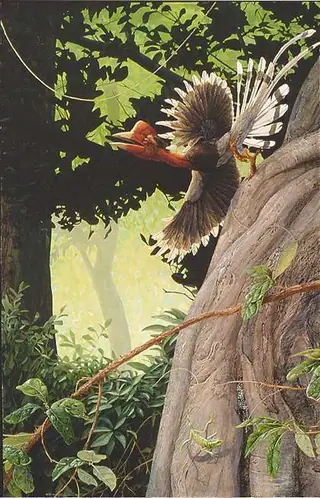 Helmeted HornbillRhinoplax vigil
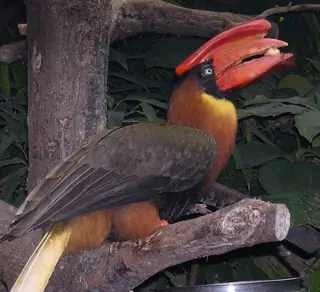 Rufous HornbillBuceros hydrocorax
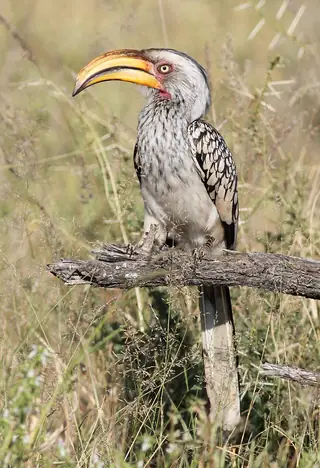 Southern Yellow-billed HornbillTockus leucomelas
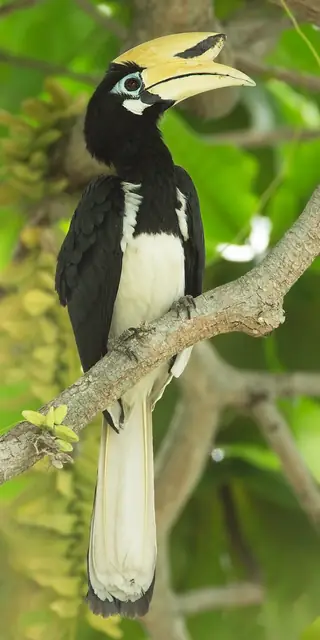 Oriental Pied HornbillAnthracoceros albirostris