

European hedgehog
Erinaceus europaeus
Mammals · family Erinaceidae · order Erinaceomorpha
Near threatened on the IUCN Red List
Oʻzbekcha: Yevropa tipratikani
About
The European hedgehog, also known as the West European hedgehog, Western European hedgehog or common hedgehog, is a hedgehog species native to Europe from Iberia and Italy northwards into Scandinavia and westwards into Ireland. It is a generally common and widely distributed species that can survive across a wide range of habitat types. It is a well-known species, and a favourite in European gardens, both for its endearing appearance and its preference for eating a range of garden pests. While populations are currently stable across much of its range, it is declining severely in Great Britain, where it is now Red Listed, meaning that it is considered to be at risk of local extinction. Outside its native range the species was introduced to New Zealand during the late nineteenth and early twentieth centuries.
From Wikipedia, CC BY-SA 4.0.
Where it has been recorded




- Records
- 938,283
- Countries
- 48
- Recorded
- 1790–2026
Most records come from
- United Kingdom 330,122
- Netherlands 149,116
- Sweden 119,634
- France 106,488
- Switzerland 82,700
- Germany 80,819
- Spain 12,951
- Denmark 11,089
- Ireland 10,817
- Norway 6,728
- Finland 5,978
- Italy 4,263
Records are places where people found and reported the animal, from GBIF; fossils and zoo animals are left out; museum specimens and tracking studies count, and well-studied countries have far more. Squares on the map: brighter means more records.
Related animals
 Southern white-breasted hedgehogErinaceus concolor
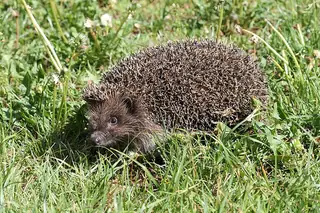 Northern White-breasted hedgehogErinaceus roumanicus
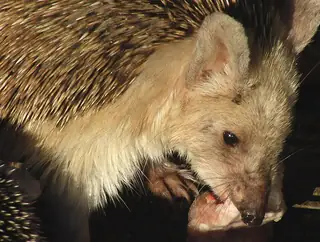 Long-eared hedgehogHemiechinus auritus
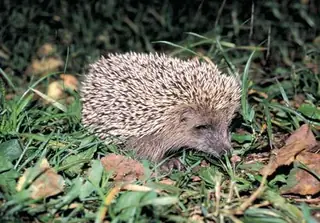 Amur hedgehogErinaceus amurensis
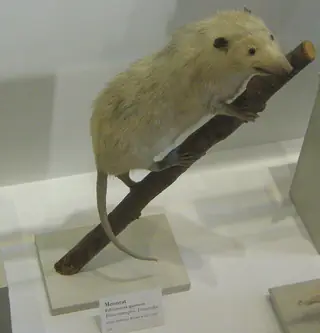 MoonratEchinosorex gymnura
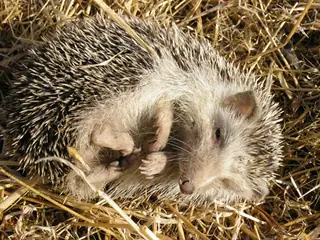 North African hedgehogAtelerix algirus
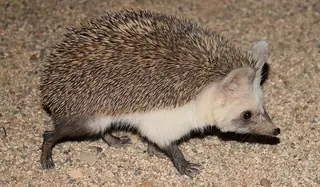 Desert hedgehogParaechinus aethiopicus
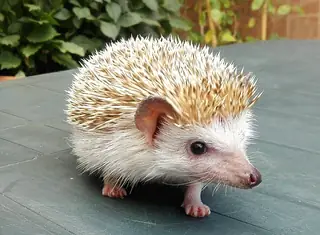 Four-toed hedgehogAtelerix albiventris