Dog tapeworm
Echinococcus granulosus
Worms and leeches · family Taeniidae · order Cyclophyllidea
About
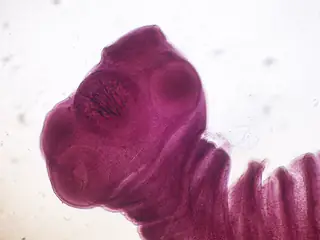
Echinococcus granulosus, also called the hydatid worm or dog tapeworm, is a cyclophyllid cestode that dwells in the small intestine of canids as an adult, but which has important intermediate hosts such as livestock and humans, where it causes cystic echinococcosis, also known as hydatid disease. The adult tapeworm ranges in length from 3 mm to 6 mm and has three proglottids ("segments") when intact—an immature proglottid, mature proglottid and a gravid proglottid. The average number of eggs per gravid proglottid is 823. Like all cyclophyllideans, E. granulosus has four suckers on its scolex ("head"), and E. granulosus also has a rostellum with hooks. Several strains of E. granulosus have been identified, and all but two are noted to be infective in humans.
From Wikipedia, CC BY-SA 4.0.
Where it has been recorded




- Records
- 2,222
- Countries
- 3
- Recorded
- 1897–2025
Most records come from
Records are places where people found and reported the animal, from GBIF; fossils and zoo animals are left out; museum specimens and tracking studies count, and well-studied countries have far more. Squares on the map: brighter means more records.