Common shrew
Sorex araneus
Mammals · family Soricidae · order Soricomorpha
Least concern on the IUCN Red List
About
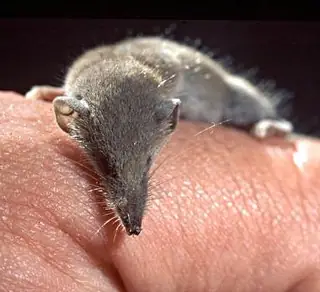
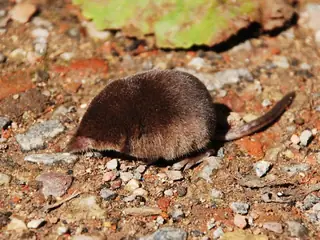
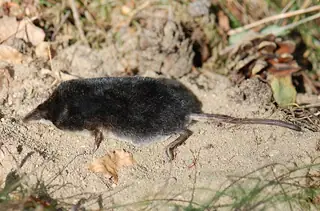
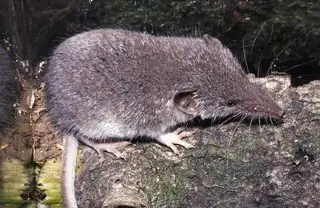
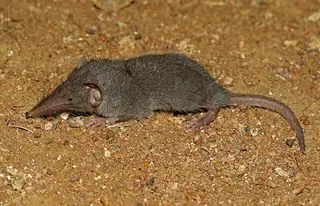
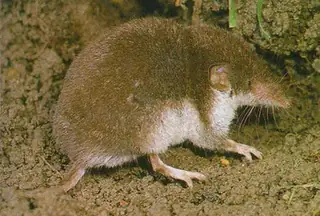
The common shrew, also known as the Eurasian shrew, is the most common shrew, and one of the most common mammals, throughout Northern Europe, including Great Britain, but excluding Ireland. It is 55 to 82 millimetres long and weighs 5 to 12 grams, and has velvety dark brown fur with a pale underside. It is one of the rare venomous mammals. Juvenile shrews have lighter fur until their first moult. The common shrew has small eyes, a pointed, mobile snout and red-tipped teeth. It has a life span of approximately 14 months.
From Wikipedia, CC BY-SA 4.0.
Where it has been recorded




- Records
- 137,450
- Countries
- 33
- Recorded
- 1796–2026
Most records come from
- Denmark 18,701
- United Kingdom 17,611
- Netherlands 7,717
- Norway 4,120
- France 2,949
- Sweden 2,558
- Switzerland 2,451
- Germany 2,344
- Russia 1,373
- Poland 1,085
- Estonia 949
- Ukraine 537
Records are places where people found and reported the animal, from GBIF; fossils and zoo animals are left out; museum specimens and tracking studies count, and well-studied countries have far more. Squares on the map: brighter means more records.