Chital
Axis axis
Mammals · family Cervidae · order Artiodactyla
Least concern on the IUCN Red List
About
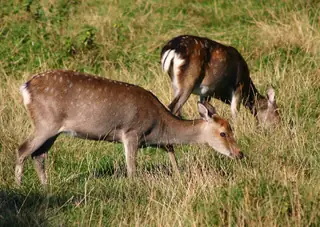
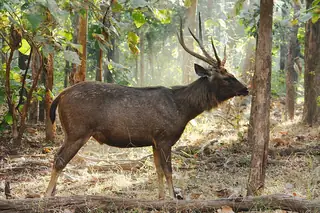
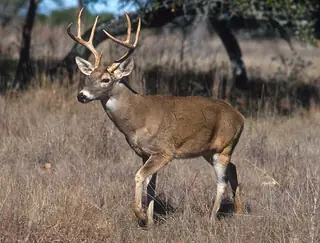
The chital, also called spotted deer and axis deer, is a deer species native to the Indian subcontinent. It was first described by Johann Christian Polycarp Erxleben in 1777. A moderate-sized deer, male chital reach 90 cm (35 in) and females 70 cm (28 in) at the shoulder. While males weigh 70–90 kg (150–200 lb), females weigh around 40–60 kg (88–132 lb). It is sexually dimorphic; males are larger than females, and antlers are present only on males. The upper parts are golden to rufous, completely covered in white spots. The abdomen, rump, throat, insides of legs, ears, and tail are all white. The antlers, three-pronged, are nearly 1 m long.
From Wikipedia, CC BY-SA 4.0.
Where it has been recorded




- Records
- 8,280
- Countries
- 23
- Recorded
- 1847–2026
Most records come from
- India 3,731
- Sri Lanka 1,512
- United States 1,047
- Nepal 653
- Argentina 595
- Australia 129
- Uruguay 120
- Croatia 60
- Bangladesh 58
- Belgium 18
- Brazil 4
- Colombia 4
Records are places where people found and reported the animal, from GBIF; fossils and zoo animals are left out; museum specimens and tracking studies count, and well-studied countries have far more. Squares on the map: brighter means more records.