Capelin
Mallotus villosus
Fish · family Osmeridae · order Osmeriformes
About
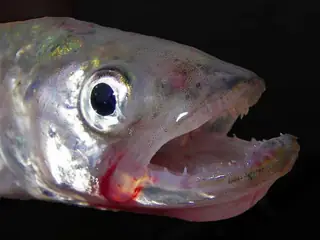
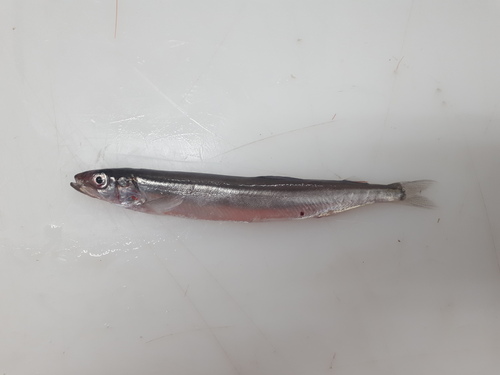
The capelin or caplin is a small forage fish of the smelt family found in the North Atlantic, North Pacific and Arctic oceans. In summer, it grazes on dense swarms of plankton at the edge of the ice shelf. Larger capelin also eat a great deal of krill and other crustaceans. Among others, whales, seals, Atlantic cod, Atlantic mackerel, squid and seabirds prey on capelin, in particular during the spawning season while the capelin migrate south. Capelin spawn on sand and gravel bottoms or sandy beaches at the age of two to six years. When spawning on beaches, capelin have an extremely high post-spawning mortality rate which, for males, is close to 100%. Males reach 20 cm (8 in) in length, while females are up to 25.2 cm (10 in) long. They are olive-coloured dorsally, shading to silver on sides. Males have a translucent ridge on both sides of their bodies. The ventral aspects of the males iridesce reddish at the time of spawn.
From Wikipedia, CC BY-SA 4.0.
Where it has been recorded




- Records
- 44,424
- Countries
- 11
- Recorded
- 1821–2026
Most records come from
- Canada 19,947
- Svalbard & Jan Mayen 7,559
- Norway 6,443
- Russia 1,261
- United States 512
- Iceland 96
- Greenland 36
- St. Pierre & Miquelon 28
- Faroe Islands 3
- United Kingdom 1
- Japan 1
Records are places where people found and reported the animal, from GBIF; fossils and zoo animals are left out; museum specimens and tracking studies count, and well-studied countries have far more. Squares on the map: brighter means more records.