Black-necked Grebe
Podiceps nigricollis
Birds · family Podicipedidae · order Podicipediformes
Least concern on the IUCN Red List
About
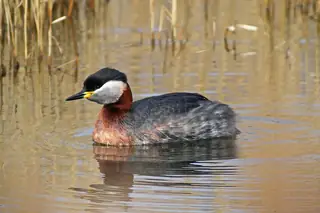
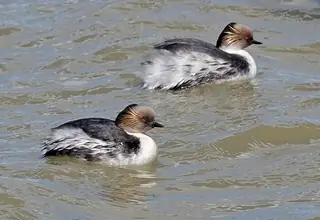
The black-necked grebe or eared grebe is a member of the grebe family of water birds. It was described in 1831 by Christian Ludwig Brehm. Its breeding plumage features distinctive ochre-coloured feathers which extend behind its eye and over its ear coverts. The rest of the upper parts, including the head, neck, and breast, are coloured black to blackish brown. The flanks are tawny rufous to maroon-chestnut, and the abdomen is white. In its non-breeding plumage, this bird has greyish-black upper parts, including the top of the head and a vertical stripe on the back of the neck. The flanks are also greyish-black. The rest of the body is a white or whitish colour. The juvenile has more brown in its darker areas. This species is present in parts of Africa, Eurasia, and the Americas.
From Wikipedia, CC BY-SA 4.0.
Where it has been recorded




- Records
- 1,304,737
- Countries
- 115
- Recorded
- 1817–2026
Most records come from
- United States 697,959
- Netherlands 112,799
- Spain 79,359
- Canada 66,627
- France 59,407
- Belgium 34,467
- Denmark 33,794
- Sweden 27,162
- United Kingdom 22,050
- Mexico 20,022
- Italy 18,905
- South Africa 15,851
Records are places where people found and reported the animal, from GBIF; fossils and zoo animals are left out; museum specimens and tracking studies count, and well-studied countries have far more. Squares on the map: brighter means more records.