Bengal slow loris
Nycticebus bengalensis
Mammals · family Lorisidae · order Primates
Endangered on the IUCN Red List
About
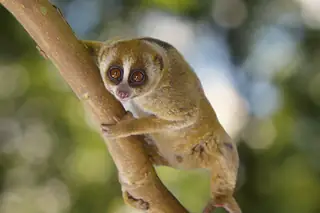
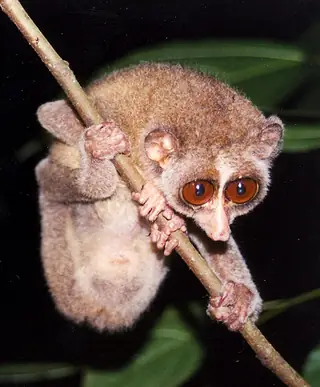
The Bengal slow loris or northern slow loris is a strepsirrhine primate and a species of slow loris native to the Bangladesh, Northeast India, Cambodia, Laos, Burma, Vietnam, southern China, and Thailand. Its geographic range is larger than that of any other slow loris species. Considered a subspecies of the Sunda slow loris (N. coucang) until 2001, phylogenetic analysis suggests that the Bengal slow loris is most closely related to the Sunda slow loris. However, some individuals in both species have mitochondrial DNA sequences that resemble those of the other species, due to introgressive hybridization. It is the largest species of slow loris, measuring 26 to 38 cm from head to tail and weighing between 1 and 2.1 kg. Like other slow lorises, it has a wet nose (rhinarium), a round head, flat face, large eyes, small ears, a vestigial tail, and dense, woolly fur. The toxin it secretes from its brachial gland differs chemically from that of other slow loris species and may be used to communicate information about sex, age, health, and social status.
From Wikipedia, CC BY-SA 4.0.
Where it has been recorded




- Records
- 234
- Countries
- 8
- Recorded
- 1879–2026
Most records come from
- Thailand 99
- China 59
- India 38
- Bangladesh 21
- Myanmar (Burma) 7
- Vietnam 3
- Bhutan 1
- Cambodia 1
Records are places where people found and reported the animal, from GBIF; fossils and zoo animals are left out; museum specimens and tracking studies count, and well-studied countries have far more. Squares on the map: brighter means more records.